
Warm and cool are the two words that show up in every beauty conversation about color, and they're also the two words that cause the most confusion. Every foundation line, every lipstick collection, every color-matching tool uses this binary — but most of them never explain what warm and cool actually mean, where they come from biologically, or why they matter at the level of a specific product.
Let's fix that. Here's everything we've learned about warm vs cool from studying color science, building an AI color analysis system, and hand-scoring over 1,000 beauty products shade by shade.
Quick Answer
The most reliable methods are the vein test (green veins suggest warm, blue/purple suggest cool), the jewelry test (gold flatters warm, silver flatters cool), and the white fabric drape test.
→ Score any product for your season — free
The Biology: What Makes Skin Warm or Cool
Your skin color comes from three pigments, and the ratio between them creates your undertone:
Not sure which season you are?
Take the free color analysis quiz — 2 minutes, no email required. Then every product in this post gets scored for your palette.
Take the Free Quiz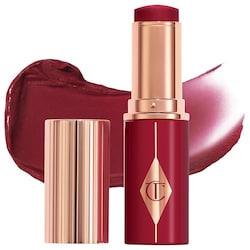


Melanin comes in two forms — eumelanin (brown-black) and pheomelanin (yellow-red). Everyone has both. The ratio varies. Higher pheomelanin relative to eumelanin creates warmer-reading skin. This is true across all skin depths — the melanin ratio affects warmth/coolness independently of how much total melanin you have.
Hemoglobin is the red-blue pigment in your blood. When more hemoglobin is visible through the skin (especially oxyhemoglobin in capillaries), the skin reads cooler and pinker. People with thinner skin or less melanin show more hemoglobin, which is one reason (but not the only one) cool undertones are sometimes associated with fairness.
Carotenoids are yellow-orange pigments you absorb from food (carrots, sweet potatoes, leafy greens). They deposit in the outermost layer of skin and add warmth. Carotenoid levels vary by diet and by how your body distributes them, but they contribute to the golden or peachy cast of warm undertones.
FREE DOWNLOAD
Free: 30-Page Color Analysis Guide
Undertones, all 12 seasons, full makeup breakdowns — everything in one guide. Drop your email and it's yours.
No spam. Unsubscribe anytime.
Warm vs Cool: The Side-by-Side Breakdown
Warm Undertone
Skin reads as: Golden, peachy, honey, or olive
Not sure of your season yet? Take the free color quiz — it takes about 2 minutes.
Your free 12-season color guide is ready
30 pages of palettes, product picks, and styling tips — matched to your season. Delivered straight to your inbox.
No spam. Just your free guide.
Veins appear: Green or olive
Best metals: Gold, brass, copper
Best whites: Cream, ivory, off-white
Flattering reds: Tomato, coral, orange-red
Flattering pinks: Peach, salmon, warm pink
Foundation labels: Warm, golden, yellow, olive
Seasons: Spring + Autumn families
Cool Undertone
Skin reads as: Pink, red, blue, or rosy
Veins appear: Blue or purple
Best metals: Silver, platinum, white gold
Best whites: Bright white, blue-white
Flattering reds: Berry, wine, blue-red
Flattering pinks: Fuchsia, rose, cool pink
Foundation labels: Cool, pink, red, blue
Seasons: Summer + Winter families
The Third Option Everyone Forgets: Neutral
The beauty industry loves a binary, but undertone isn't actually a two-category system. Neutral undertone is real, it's common, and it's the reason so many people can't figure out whether they're warm or cool.
Neutral means your warm and cool pigments are roughly balanced. You don't skew strongly in either direction. This shows up as: veins that look blue-green (not clearly one or the other), both gold and silver jewelry looking fine, and getting contradictory results on different undertone tests.
If you've taken every quiz, watched every TikTok, and still can't land on warm or cool — you're probably neutral. And that's not a cop-out answer. It's a real undertone category that the 12-season system accounts for. Neutral-warm leans toward Soft Autumn or True Spring. Neutral-cool leans toward Soft Summer or True Summer. Pure neutral can sit at the boundary between warm and cool seasons.
What About Olive?
Olive undertone deserves its own section because it confuses everyone. Olive skin has a green-yellow cast that isn't pure warm and isn't pure cool — it's warm-leaning with a muting green tint from the combination of melanin types and how they interact with hemoglobin.
Olive undertones are common across Mediterranean, South Asian, East Asian, Latinx, and Middle Eastern skin. The practical impact: many "warm" foundations will look too orange on olive skin, and many "cool" foundations will look too pink. You need products specifically balanced for olive, which (frustratingly) fewer brands make.
In the 12-season system, olive-toned people most often fall into Soft Autumn, True Autumn, or Deep Autumn — but there are olive-toned people in other seasons too. The green muting effect can make chroma assessment especially tricky, which is where AI-based analysis has a real advantage over the mirror-and-fabric approach.
6 Myths That Keep People Mistyped
"Fair skin = cool, dark skin = warm"
This is the most persistent misconception in color analysis and it's completely wrong. Depth (light to dark) and temperature (warm to cool) are independent. Lupita Nyong'o is cool-toned with deep skin. Nicole Kidman is warm-toned with very fair skin. The association exists because early color analysis systems were developed primarily on European skin tones where cool-fair and warm-deep correlations were overrepresented in the sample. The 12-season system corrects for this.
"Your hair color determines your undertone"
Hair color correlates loosely with undertone (red hair tends warm, ash hair tends cool) but it's not determinative. Black hair exists across all undertones. Brown hair exists across all undertones. And if you color your hair, it says nothing about your skin's underlying pigment balance. Undertone is about skin pigments — melanin, hemoglobin, and carotenoids — not about what's growing out of your scalp.
"If you tan easily, you're warm"
Tanning ability correlates with melanin quantity, not undertone specifically. Cool-toned people with high melanin (which is common in East Asian, South Asian, and African skin) can tan easily and still be definitively cool. This test has some signal — the sun reaction test in our undertone guide uses it as a tiebreaker — but it should never be the primary way you type yourself.
"You should only wear your undertone's colors"
Knowing your undertone helps you choose better, but it's not a prison. The real game is knowing which dimension matters most for each product category. Foundation? Undertone is critical — a mismatch is immediately visible. Eyeshadow? Chroma and contrast matter more. Blush? Undertone matters, but depth matters equally. TruHue weights these dimensions differently for each product category because a one-size-fits-all approach doesn't reflect how color actually works on the face.
"The vein test is definitive"
The vein test is useful but far from perfect. Vein color is affected by skin thickness, fat distribution, hydration, and temperature — not just underlying pigments. It's harder to read on deeper skin. And it gives a warm/cool binary that misses neutral entirely. Use it as one data point among several, not as your sole method.
"Undertone is just about skin"
When we score products in TruHue, we evaluate undertone across your overall coloring — skin, hair, and eyes together. A warm-skinned person with very cool-toned eyes and ashy hair may be neutral overall even though their skin alone reads warm. The 12-season system considers the complete picture because that's what people actually see when they look at you wearing a color.
How Undertone Affects Different Product Categories
Here's something most color guides don't get into — undertone doesn't matter equally for every type of product. When we built TruHue's scoring system, we had to figure out exactly how much weight to give undertone vs. depth vs. chroma for each category. Here's what we found:
Foundation and concealer: Undertone is the dominant factor. A foundation that matches your depth but misses your undertone will look obviously wrong — orange, pink, or gray on the skin. This is why shade matching is so hard: brands have to get both depth AND temperature right.
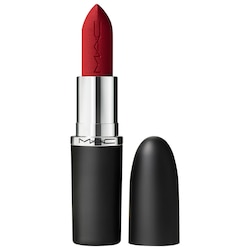
Lipstick and lip products: Undertone matters a lot because lip color sits directly adjacent to your skin and the contrast between the two is immediately visible. A warm nude on cool skin reads orange. A cool berry on warm skin reads harsh. This is the category where most people first notice undertone mismatch.
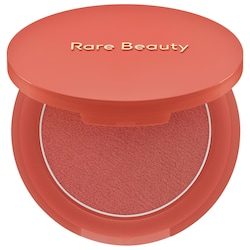
Blush: Undertone and depth share importance roughly equally. A warm peach blush on cool skin looks muddy, and a cool pink blush on very deep warm skin may not register at all. You need both the temperature AND the intensity to be in the right zone.
Eyeshadow: Chroma and contrast matter more than undertone here because eyeshadow sits against the eyelid (a small area) and interacts primarily with your eye color and brow color rather than your overall skin. You can break "undertone rules" with eyeshadow more freely than with any other category.
Mascara and brow products: Contrast is king. The question isn't warm vs cool — it's whether black is too harsh for your coloring (it often is for Light seasons) or whether brown provides enough definition (it often doesn't for Deep or Winter seasons).
The Bottom Line
Understanding warm vs cool gives you the vocabulary to talk about color and the foundation to start making better choices. But it's the first step, not the whole journey. Undertone plus depth plus chroma equals your full color profile — your color season. And your color season is what lets you walk into any store, look at any product, and know whether it's going to be a YAY or a NAY before you even try it on.
Explore the Seasons by Undertone
See how warm and cool undertones map to the 12 color seasons:
Warm seasons (Spring + Autumn): Light Spring, True Spring, Bright Spring, Soft Autumn, True Autumn, Deep Autumn
Cool seasons (Summer + Winter): Light Summer, True Summer, Soft Summer, Bright Winter, True Winter, Deep Winter
Read the complete guide to all 12 seasons → · Find your season →
Frequently Asked Questions
How do I know if I have warm or cool undertones?
The most reliable methods are the vein test (green veins suggest warm, blue/purple suggest cool), the jewelry test (gold flatters warm, silver flatters cool), and the white fabric drape test. For the most accurate result, combine multiple tests rather than relying on just one.
What causes warm vs cool undertones?
Undertone is determined by the ratio of two pigments in your skin: pheomelanin (warm, yellow-red) and eumelanin (cool, brown-black), plus hemoglobin visibility. This ratio is genetic and doesn't change with tanning or aging.
Can your undertone change over time?
No — undertone is determined by your genetics and stays the same throughout your life. What can change is your surface color from sun exposure, but the underlying warm or cool cast remains constant.
What is a neutral undertone?
A neutral undertone means you have a roughly equal balance of warm and cool pigments. People with neutral undertones can typically wear both gold and silver jewelry and look good in both warm and cool colors, though they may still lean slightly one way.
Want to find your color season yourself?
The self-guided course walks you through it — 7 modules, 18 draping exercises, printable swatch set. $24.99, instant download.
See the Course →Keep exploring
- How to check any product in store
- How to find your undertone
- The 12 color seasons explained
- The four dimensions of color analysis
- Free color analysis quiz
- Blush for cool skin tones
- Am I Soft Autumn or Warm Autumn?
- Warm and cool colors (Wikipedia) (external)
- Human skin color (Wikipedia) (external)
- Am I Warm or Cool Toned? Here's How to Tell
- Best Colors for Warm Skin Tones
- Best Colors for Cool Skin Tones
- Summer 2026 Hair Color by Color Season
- Best Colors for Cool Skin Tones
- Score any product for your season — free, instant (tool)
Find out if these products work for you
Your color season determines which shades score YAY, OKAY, or NAY. Take the free quiz and see your personalized scores.
Find My SeasonShop the products in this post
Some links in this post are affiliate links. When you shop through them, TruHue earns a small commission at no cost to you — it’s how we keep the app free.
Take TruHue Shopping With You
Scan any barcode in the store and see your YAY, OKAY, or NAY score before you buy. Free on the App Store.
Download the App →Go Beyond Warm vs Cool
TruHue measures all four dimensions of your coloring — undertone, depth, chroma, and contrast — and scores any product against your personal palette.
Join the TruHue Waitlist